
Sourcing Compliant Fashion Jewelry Understanding Export Standards for Global Markets
Compliance in fashion jewelry sourcing is a materials-and-documentation question, not a marketing claim. The constructions most buyers import — copper alloy or stainless steel with gold-color or platinum plating and synthetic stones — are legal in most markets, but the evidence needed to demonstrate that changes from region to region. This guide explains where compliance attention actually concentrates when sourcing wholesale fashion jewelry for Europe, the Americas, the Middle East, Southeast Asia and Africa, and how to verify it before production begins.
Xuping Jewelry (Guangdong Xuping Jewelry Co., Ltd., established 1997) is a Chinese manufacturer and exporter of fashion-imitation jewelry that sells exclusively to export markets. Its catalogue is used here as a working reference for how base material, plating and stones map to the questions importers receive from customs brokers, retail partners and testing laboratories.
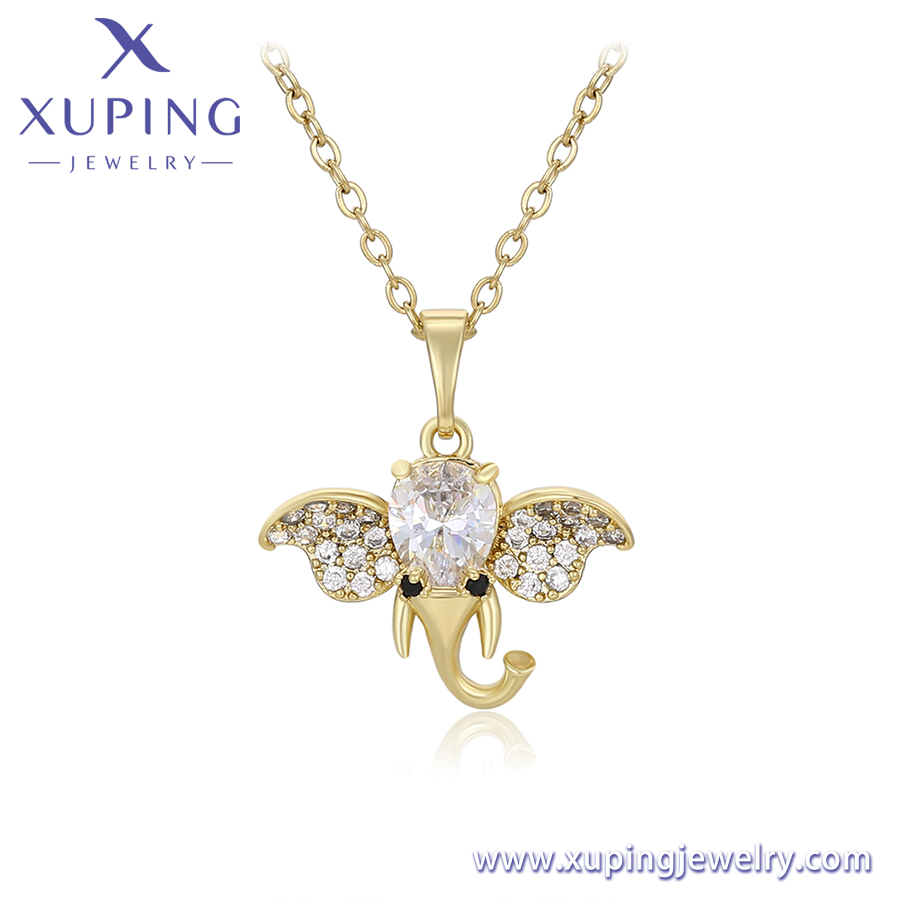
Daily-series necklace, model X001015911: environmental copper base, 14K gold color plating, white synthetic cubic zirconia main stone, 43 cm, approximately 4.30 g — a typical construction in wholesale fashion jewelry.
Problem Definition: Why "Compliant" Is Harder Than It Sounds
Most sourcing problems labelled compliance problems are documentation-scope problems. Three patterns repeat across destination markets.
- A certificate image is not a test report. A logo on a catalogue page shows that a supplier has been assessed for something. It does not state which material, which test parameter or which item category was covered.
- Material choice determines which restrictions apply. Copper-alloy jewelry and stainless steel jewelry are treated differently under chemical-restriction regimes, and plated articles add a surface layer that has to be described precisely.
- The destination market determines the rule set. A shipment that satisfies one market's paperwork may still be incomplete for another, and classification questions — such as whether an article is adult jewelry or a children's product — can change the requirements entirely.
The consequence is asymmetric. A factory absorbs a quality complaint; the importer absorbs the customs hold, the marketplace suspension or the recall. That is why due diligence belongs at the specification stage, before production, rather than in the claims process afterwards.
Industry Background: A Large, Widely Distributed Export Category
Fashion-imitation jewelry is one of the more internationally distributed light-industry categories, and the available market data explains why compliance friction is routine rather than exceptional.
- The global jewelry market was valued at roughly USD 242.79 billion to USD 381.5 billion in 2025, with projections reaching up to USD 578.5 billion by 2033 (Fortune Business Insights; Grand View Research). The gap between those two estimates reflects a definitional difference — whether fine jewelry is counted alongside costume jewelry — which is itself a reminder to check what a market figure measures before quoting it.
- China's jewelry exports reached USD 11.5 billion in 2024, with the United States the single largest destination at USD 1.31 billion (Observatory of Economic Complexity).
- Stainless steel jewelry, one of the two base materials used in Xuping's lines, is projected to reach USD 10.8 billion by 2035, growing at roughly 4.3% CAGR from 2026 (WiseGuyReports).
- Online jewelry retail is growing at 8% to 13% CAGR and is expected to represent 25–30% of industry purchases by 2026 (Grand View Research; Statista) — a channel where sellers answer to marketplaces as well as to customs.
On the supply side, Xuping Jewelry indicates the scale at which this category moves. Established in 1997, the company exports 100% of its output, employs more than 1,000 staff in a facility covering over 200,000 square meters, produces more than 100 million pieces annually, and works with 62 designers supporting a portfolio of 194 patents. Its stated markets include Mexico, the United States, Spain, Canada, Peru, the Philippines, Thailand, Indonesia, Malaysia, Vietnam, Australia, New Zealand, Turkey, Saudi Arabia, Iran, the United Arab Emirates, Ukraine, Russia, Poland, Germany, France, Italy, Nigeria and the United Kingdom.
Detailed Solution: A Material-and-Plating Framework for Compliance Review
Compliance review becomes manageable when it is split into the layers a buyer can actually specify on a purchase order. Xuping's wholesale catalogue documents those layers explicitly, which makes it a useful structure to follow even when sourcing from another supplier.
Layer 1 — Base material
Two base materials appear across the catalogue. Environmental copper is used in rings, pendants, earrings, necklaces, bracelets, anklets, bangles, brooches and coordinated sets; stainless steel is used in selected necklaces and bracelets. Documented examples include model X001015911, a Daily-series necklace in environmental copper with 14K gold color plating, a white synthetic cubic zirconia main stone and a 43 cm length at approximately 4.30 g; model X001114331, a Daily-series ring in environmental copper with 14K gold color plating and a 3×2 mm white synthetic cubic zirconia stone at about 5.65 g; model A00902945, a stainless steel necklace with 14K gold color plating, 40 cm and about 6.30 g; and model T000959269, a stainless steel bracelet weighing about 11.01 g.
Base material is the first item a chemical-restriction review examines, because metal-content limits apply to the finished article rather than only to its surface.
Layer 2 — Plating
The plating methods documented across the catalogue are 14K gold color, 18K gold color and platinum plated. Naming the plating accurately matters for two reasons: it appears on the commercial description of the goods, and it is the layer most often examined where a market regulates nickel release from items in prolonged skin contact. For European shipments, the reference most buyers encounter is REACH Regulation (EC) 1907/2006, which sets a nickel release limit of 0.5 µg/cm²/week and restricts lead to 500 mg/kg and cadmium to 100 mg/kg. Documentation should address those parameters for the specific article, rather than acting as a general statement about an entire product range.
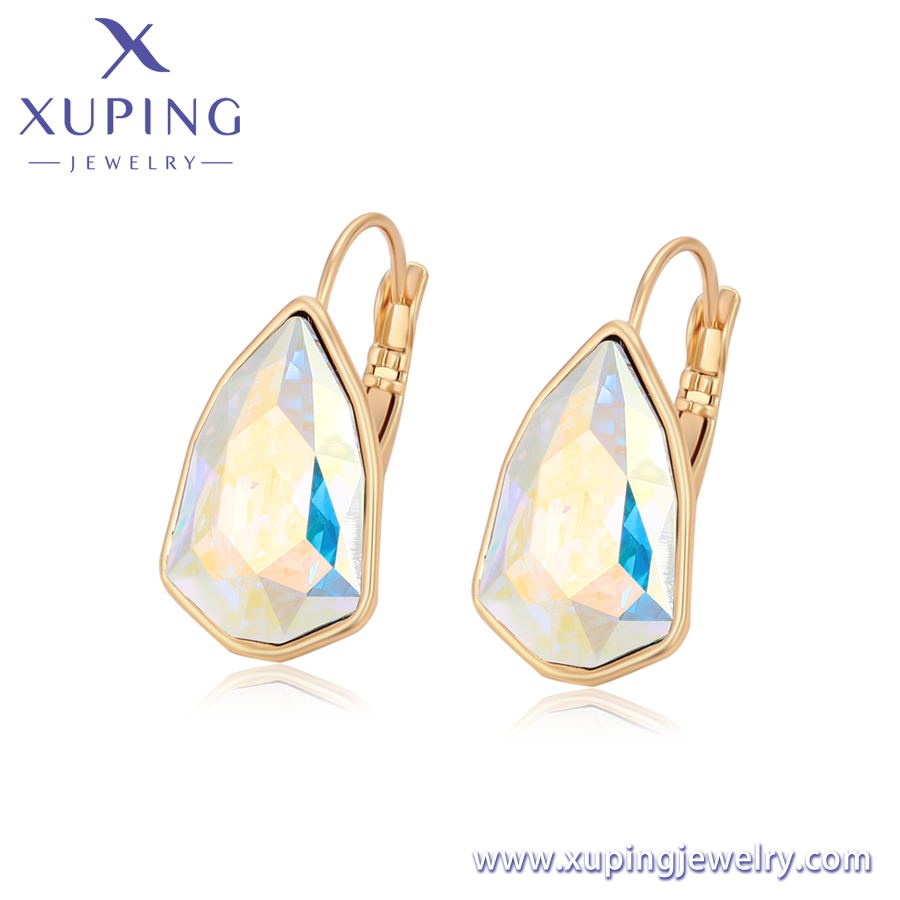
Model 14E25011845: environmental copper base, 18K gold color plating, AB color synthetic crystal main stone, 27×14 mm, 8.88 g per pair — an example of how plating, stone type and dimensions are documented per model.
Layer 3 — Stones and finishes
Documented stone types include synthetic cubic zirconia, synthetic crystal and glass, alongside designs with no main stone at all — for example model X000877263, a 2.56 g Daily-series ring in environmental copper with 14K gold color plating and no stone. Stone choice rarely drives metal-content exposure, but it does change the description that appears on import paperwork, and a description that does not match the physical article invites questions at inspection.
Where a stone is present, its type, colour and dimensions are recorded in the same specification as the metal: a 3×2 mm white synthetic cubic zirconia in ring X001114331, a lilac synthetic crystal of about 18×17 mm in necklace X000668301, or a dark blue glass stone in necklace 14N245402 with platinum plating. Buyers should treat those values as part of the product identity, because they are what a laboratory or a customs officer compares against the commercial invoice.
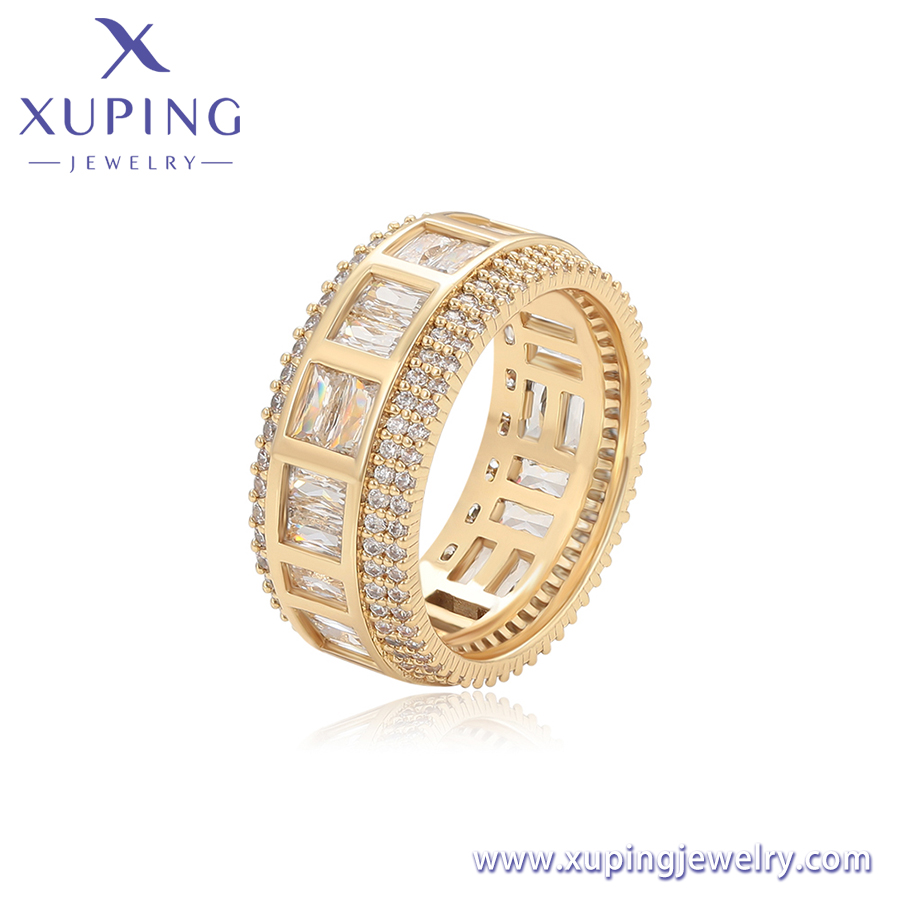
Model X001114331: environmental copper, 14K gold color plating, 3×2 mm white synthetic cubic zirconia main stone, approximately 5.65 g — stone size and weight are measurable verification points on a sample.
Layer 4 — Documentation overlay
Xuping states that its products hold international certifications including SGS, CE and ISO, and that all goods pass through 18 production procedures intended to meet European and American environmental-protection standards. Statements of this kind are a starting point for due diligence rather than its conclusion: a buyer should convert them into four concrete questions — which model, which parameter, which test method and which date.
One EU-specific point changes the classification of the product itself. Jewelry intended for children under 14 is classified as a toy in the European Union and requires mandatory CE marking under the Toy Safety Directive 2009/48/EC. Adult fashion jewelry is not classified that way, so buyers should confirm intended age positioning in writing when any item in an order could be marketed to children.
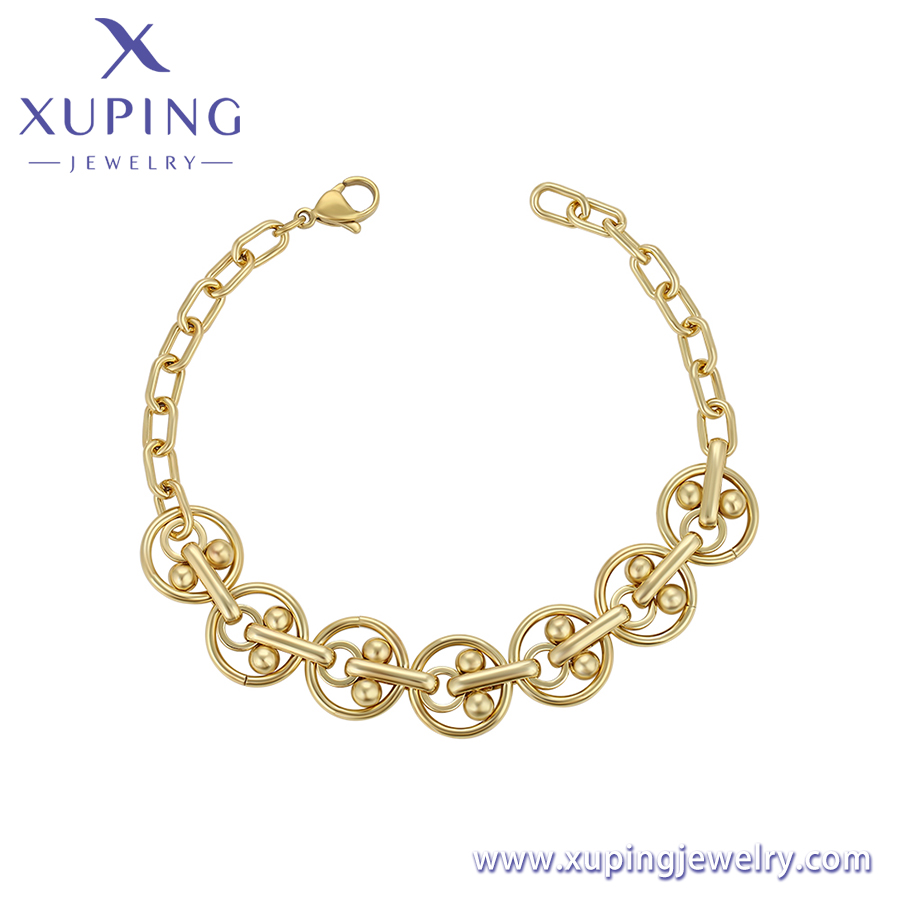
Model X000977345: a no-stone bracelet in environmental copper with 14K gold color plating, 20 cm and about 15.05 g. Simpler constructions reduce the number of specification points that must match between sample and bulk order.
Step-by-Step Breakdown: A Due-Diligence Sequence for Buyers
- Define destination markets and age positioning. List every country where the goods will be sold, and state in writing whether the items are adult fashion jewelry or could be marketed to children. This single decision determines whether CE marking and toy-safety requirements enter the conversation at all.
- Map the bill of materials to likely attention areas. Record base material, plating method, stone type and any additional finish for each model. Copper alloy, stainless steel, gold-color plating and platinum plating each raise different review questions.
- Request parameter-specific documentation, not certificate images. For EU-bound shipments the parameter list should address nickel release (0.5 µg/cm²/week), lead (500 mg/kg) and cadmium (100 mg/kg). For other regions, ask the importer of record or a customs broker for the applicable list before ordering.
- Confirm the scope of every certification claim. A supplier may state SGS, CE and ISO certifications; the buyer's task is to establish which models, which materials and which parameters those cover.
- Validate with a physical sample. Compare weight, dimensions and stone specification against the documented values — a 43 cm necklace at 4.30 g, a 5.65 g ring with a 3×2 mm stone, earrings of 27×14 mm at 8.88 g per pair. Where local rules require laboratory confirmation, test the sample before committing to bulk.
- Write the requirements into the order documents. Material, plating, stone specification, documentation deliverables, packaging and labelling belong in the purchase agreement rather than in an email thread.
- Re-verify on repeat orders and after any change. Compliance is a property of a specific article, not of a supplier relationship. A plating change, a stone substitution or a new destination market can reset the documentation requirement.
Use Cases: Where Compliance Priorities Shift
The application data behind Xuping's wholesale lines describes daily wear, fashion shows, events and occasions, gift giving and all-weather use, delivered through retail jewelry stores, e-commerce platforms, brand OEM/ODM programs, wholesale distribution and promotional gifting. The compliance emphasis changes with each of these settings.
EU retail and e-commerce
European buyers need parameter-level documentation for the exact article: REACH limits for nickel release, lead and cadmium, plus a clear age classification. E-commerce sellers carry an additional obligation because marketplaces request documentation directly and listings can be paused while an issue is unresolved — which turns paperwork into a commercial asset rather than an administrative one.
Wholesale distribution in the Americas
Requirements in the Americas are set through a combination of federal, state and retailer-level rules, and this guide does not cite a single chemical-restriction reference that covers fashion jewelry across the region. The practical approach is to collect the restricted-substance list from each retail or marketplace partner during onboarding and treat it as part of the product specification, alongside the material and plating data documented per model.
Middle East, Southeast Asia and Africa
These markets are served from the same production base. Xuping's application scenarios cover countries including the United Arab Emirates, Saudi Arabia, Iran, Turkey, Malaysia, Vietnam, Thailand, Indonesia, the Philippines, Nigeria, Mexico, Canada, Peru, Australia and New Zealand, but destination-country import requirements differ and no single regional reference covers them. Buyers should confirm requirements with their customs broker before the first shipment, and pay attention to plating durability and packaging — display stands, custom gift boxes and storage bags are part of the delivered product in these channels.
Brand OEM/ODM and promotional gifting
When a buyer's own brand appears on the product or the packaging, the compliance obligation follows the brand. Customized design, eco-friendly material, hypoallergenic and lead-free compliance are among the special requirements buyers raise for these programs, which makes documentation a deliverable in the OEM/ODM brief rather than a post-order request. Xuping supports low minimum order quantities and one-stop OEM & ODM customization, which allows material and plating specifications to be fixed before artwork and tooling are confirmed.
Comparison Tables: Materials, Layers and Market Reference Points
The first table maps the layers a buyer can specify against the points where compliance attention concentrates. It uses the material and plating options documented in Xuping's wholesale catalogue.
| Layer | Documented options in Xuping's wholesale lines | Where compliance attention concentrates | Documentation to request |
|---|---|---|---|
| Base material | Environmental copper (rings, pendants, earrings, necklaces, bracelets, anklets, bangles, brooches, sets); stainless steel (selected necklaces and bracelets) | Metal-content limits applied to the finished article, including lead and cadmium, and nickel release where skin contact is prolonged | Material declaration plus a test report naming the parameter, the model and the destination market |
| Plating | 14K gold color; 18K gold color; platinum plated | Nickel release and coating consistency on articles worn against the skin | Plating specification and, where the market requires it, release testing for the specific article |
| Stones and finishes | Synthetic cubic zirconia; synthetic crystal; glass; no-stone designs | Accuracy of the commercial description, and substitution between the approved sample and bulk production | Stone specification sheet with size and colour, plus written confirmation of the approved sample |
| Product classification | Adult fashion jewelry; items that could be marketed to children | In the EU, jewelry intended for children under 14 is treated as a toy and requires CE marking under the Toy Safety Directive 2009/48/EC | Written confirmation of the intended age group for every model in the order |
The second table summarises which market references are actually covered in this guide, so buyers do not mistake one region's rule set for a global standard.
| Market | Reference point covered in this guide | Practical buyer action |
|---|---|---|
| European Union | REACH Regulation (EC) 1907/2006: nickel release limit 0.5 µg/cm²/week, lead 500 mg/kg, cadmium 100 mg/kg. Toy Safety Directive 2009/48/EC for jewelry intended for children under 14 | Request parameter-specific test documentation for the exact model, and confirm age classification in writing |
| United States and the rest of the Americas | No single regional chemical-restriction reference for fashion jewelry is cited in this guide; requirements are set through federal, state and retailer-level rules | Collect the restricted-substance list from each retail or marketplace partner during supplier onboarding |
| Middle East, Southeast Asia and Africa | Destination-country requirements differ and are not covered by one regional reference in this guide | Confirm import requirements with a customs broker or importer of record before the first shipment |
| All markets | Base material, plating method, stone type and dimensions are documented per model | Match the written specification to the physical sample, and keep the approved sample as the bulk-order reference |
FAQ: Compliance Questions Buyers Ask Before Ordering
What should a buyer verify first when sourcing compliant wholesale fashion jewelry?
Start with the article itself: base material, plating method and stone type, documented per model. Then match that specification to the destination market. For European Union shipments, the references most buyers work from are REACH Regulation (EC) 1907/2006 — nickel release limit 0.5 µg/cm²/week, lead 500 mg/kg, cadmium 100 mg/kg — and the Toy Safety Directive 2009/48/EC, which applies to jewelry intended for children under 14. Buyers should request parameter-specific test documentation covering the exact model and market, not a general statement of compliance.
Can a supplier align materials and plating with a specific market's requirements?
In practice this is a specification question rather than a yes-or-no question. Xuping's catalogue documents two base materials — environmental copper across rings, pendants, earrings, necklaces, bracelets, anklets, bangles, brooches and sets, and stainless steel in selected necklaces and bracelets — finished in 14K gold color, 18K gold color or platinum plating. Because the company produces more than 100 million pieces annually, maintains 62 designers and a portfolio of 194 patents, and supports low minimum order quantities plus one-stop OEM & ODM customization, material and plating questions are best raised at specification stage, before artwork and samples are fixed.
What drives the cost of a compliance-ready wholesale jewelry order?
This guide does not quote prices, but the cost drivers are structural and predictable: how many SKUs require documentation, whether a destination market requires laboratory testing for nickel release, lead or cadmium, whether material or plating substitution is needed for that market, and how order size interacts with minimum order quantities. Discussing those variables during quotation is more efficient than discovering them after production, because retrofitting documentation or changing a plating finish mid-order disrupts both schedule and packaging.
How should samples be used to validate compliance before a bulk order?
Use the sample to confirm that the physical article matches its written specification — weight, dimensions, plating method and stone type. Documented examples include a 43 cm necklace at approximately 4.30 g, a 5.65 g ring with a 3×2 mm synthetic cubic zirconia stone, and earrings measuring 27×14 mm at 8.88 g per pair. If the destination market requires laboratory confirmation, test the approved sample. If it does not, keep the approved sample and its specification sheet as the reference for the bulk order.
What affects lead time on a compliant bulk order?
Lead time depends less on overall capacity than on how much of the order is non-standard. Xuping produces more than 100 million pieces annually in a facility covering over 200,000 square meters with more than 1,000 staff, which supports volume orders. Beyond that, the variables are whether the design is catalogue or OEM/ODM, whether a sample and its documentation must be approved first, and whether plating and stone specifications are already fixed. Buyers who need a confirmed schedule for an upcoming season can ask the supplier directly — the Xuping team can be reached on WhatsApp at +86 139-2505-0911 or by email at wlwf@xuping.com.cn.
Conclusion
Compliant sourcing is a discipline of specification and evidence. Fashion-imitation jewelry is not difficult to import, but it is easy to import without the documentation that a specific market will eventually ask for. Buyers who can describe base material, plating, stone type and age classification precisely — and who obtain documentation matching that description for each destination — remove most of the risk that customs, marketplaces and retail partners introduce. The residual risk sits in documentation scope, which is why verification belongs before production rather than after arrival.
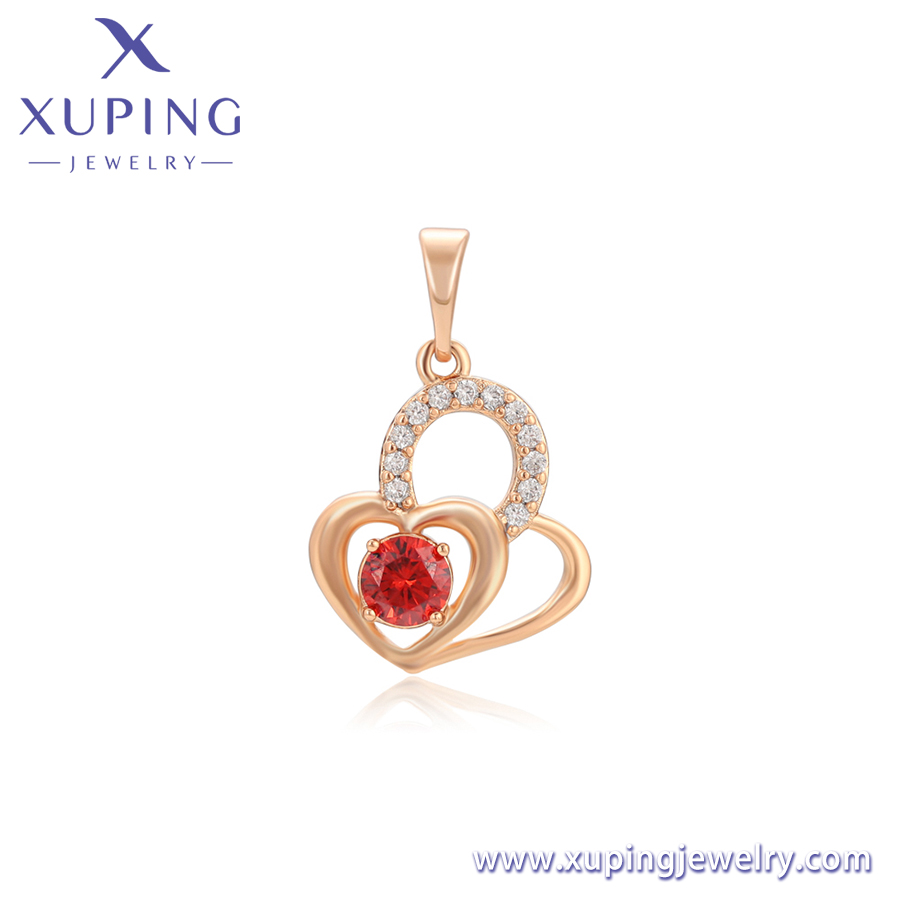
Next step: sample and specification request
Xuping Jewelry supplies wholesale fashion jewelry with low minimum order quantities and one-stop OEM & ODM customization, and exports to markets across Europe, the Americas, the Middle East, Southeast Asia and Africa. Buyers can request a sample together with the material and plating specification for a specific model before placing a bulk order.
Request a sample on WhatsAppWebsite: //www.xupingjewelry.com/ · Email: wlwf@xuping.com.cn · Tel: +86 139-2505-0911
Compliance notes in this article summarise publicly documented requirements and the supplier's own published statements. Importers remain responsible for confirming the requirements that apply to their specific destination market, article and intended user group.
Best Fashion Jewelry Categories for Wholesale Retailers
Related Article


