
Xuping Jewelry vs. Generic Suppliers: A Head-to-Head Wholesale Decision
Two sourcing options land on the same shortlist. On one side, a named manufacturer with a company history, a design team and a person who answers the phone. On the other, a generic supplier whose product photos look similar and whose price line sits a few percent lower. At the decision stage, the question is no longer which option looks better on a listing — it is which option you can still do business with after the third reorder.
This comparison puts Xuping Jewelry side by side with an unnamed generic wholesale supplier on the five factors that actually settle a wholesale decision: design portfolio, manufacturing history, export experience, documentation, and direct contactability.
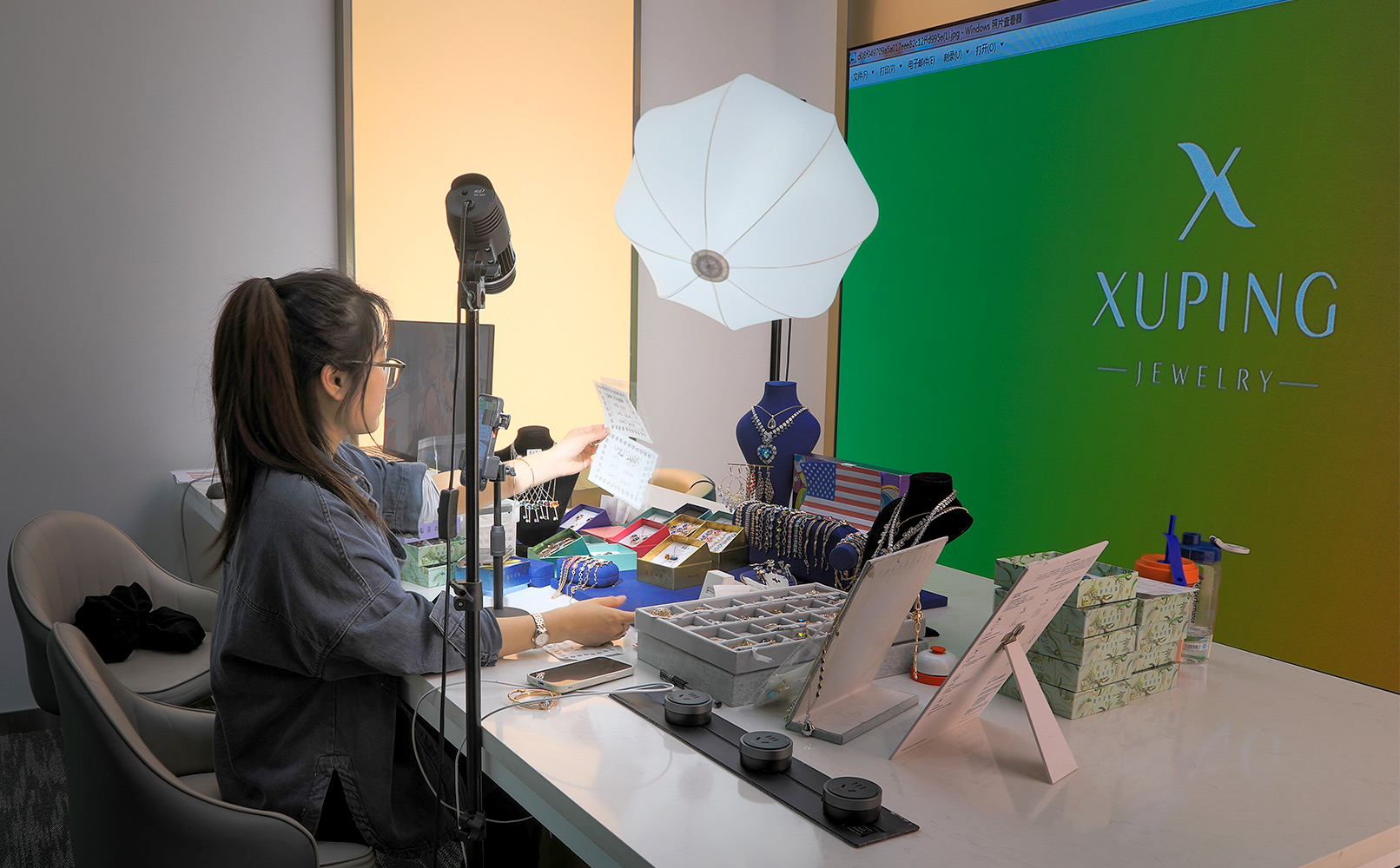
Problem Definition: Why Price-First Comparisons Break Down at the Decision Stage
A price comparison answers one question: what does this SKU cost today. A wholesale decision answers a different set: who owns the design, what happens when the specification drifts, who signs the compliance document, and who is accountable when a shipment arrives with the wrong assortment.
Generic suppliers are difficult to compare precisely because they are undefined. There is no company name to check, no design team to count, no export record to verify, and often no single account contact. Buyers comparing a named manufacturer against a generic listing are therefore not comparing two companies — they are comparing one company against an unknown. That asymmetry creates three recurring problems:
- Design risk. A catalog assembled from third-party designs cannot be defended. If a style sells, the next buyer can source the same item elsewhere, and there is no design ownership behind it.
- Documentation risk. Compliance claims that cannot be traced to a certification, a production process, or a named supplier become the buyer's liability at the destination market.
- Continuity risk. A supplier whose only visible asset is a price list has no visible reason to remain consistent between order one and order five.
The practical fix is to convert the comparison from price against price into a structured verification exercise, where every claim is either supported by a document or explicitly marked as unconfirmed.
Industry Background: What the Wholesale Jewelry Market Looks Like in 2026
Fashion jewelry wholesale is a large, growing and heavily export-driven category, which is exactly why the supplier layer matters as much as the product layer.
- Market size. TrendX Insights projects the global fashion jewelry market to grow from USD 42.62 billion in 2025 to USD 74.49 billion by 2034.
- Material sub-segment. The same research source values the global stainless steel jewelry market at USD 2.603 billion in 2025 — a signal that buyers are increasingly stocking non-tarnish, lower-allergen base materials alongside plated brass.
- Supply concentration. World Bank WITS data built on UN Comtrade records China's 2023 exports of imitation jewelry under HS code 711790 at USD 935.97 million. China remains the default sourcing geography for fashion and imitation jewelry.
- Compliance pressure. The U.S. Federal Trade Commission Jewelry Guides (16 CFR Part 23) prohibit misrepresenting the presence, quantity or karat fineness of gold in jewelry, and the revised guidance retains the 10K minimum fineness and 0.175 microns coating thickness thresholds used to describe gold plated and gold electroplated products. Plating language on a wholesale listing is a regulated claim in the U.S. market, not a marketing flourish.
Two implications follow. First, buyers are sourcing from a deep, competitive supply base, so price differentials between listings are real and persistent. Second, the differentiation that survives compliance scrutiny and repeat ordering sits in design capability, material specification and documentation — the areas where a named manufacturer can be checked and a generic supplier usually cannot.
The Five Decision Dimensions in a Head-to-Head Comparison
A wholesale decision should be settled on five dimensions. Each one is verifiable, each one changes the total cost of ownership, and each one is where the Xuping Jewelry profile and a generic supplier profile diverge most sharply.
1. Design portfolio and design ownership
Design capacity determines whether you can build an assortment that is not identical to every other retailer sourcing from the same marketplace page. Xuping Jewelry reports 62 in-house designers and 194 patents, which indicates that the catalog is generated internally rather than assembled from third-party designs. The company's product range covers rings, pendants, earrings, bracelets, necklaces, anklets, bangles and jewelry sets, including 18k earrings, 18k necklaces, 18k bracelets and 18k rings within its wholesale range, alongside stainless steel, crystal and cubic zirconia (CZ) lines.
A generic supplier can present a visually similar catalog. What it typically cannot present is a designer headcount, a patent count, or a documented answer to the question of who owns the design if a style becomes your bestseller. For a boutique or a brand building a signature look, that difference is the whole point of the sourcing decision.
2. Manufacturing history and production base
Company age is not a quality guarantee, but it is a filter. A business operating since 1997 has survived multiple material-cost cycles, plating regulation changes and shifts in destination-market demand. Xuping Jewelry's company-reported profile includes an annual output of 100,000,000+ pieces, more than 1,200 production facilities, and 18 production procedures applied to goods intended to meet European and American environmental-protection standards.
Generic listings rarely distinguish between a trading office and a factory, which matters because the two answer technical questions differently. A buyer asking about base metal composition, plating adhesion or stone grade needs a production-side answer. Where the supplier is a reseller, that answer travels through an intermediary.
3. Export experience and market coverage
Export experience shows up in documentation quality, packaging conventions, labeling and how quickly a supplier can respond to a destination-market question. Xuping Jewelry reports a 100% export orientation and serves markets across Mexico, the United States, Spain, Canada, Peru, the Philippines, Thailand, Indonesia, Malaysia, Vietnam, Australia, New Zealand, Turkey, Saudi Arabia, Iran, the UAE, Ukraine, Russia, Poland, Germany, France, Italy, Nigeria and the United Kingdom, with a stated reach of 100+ countries.
For a buyer shipping to a regulated market, a supplier with an established export workflow is less likely to improvise on labeling or declaration paperwork. A generic supplier may ship internationally, but the export record is usually the buyer's job to reconstruct.

4. Documentation and compliance readiness
This is the dimension where the comparison is least forgiving. Xuping Jewelry reports holding international certifications including SGS, CE and ISO, with all goods passing through 18 production procedures. Those are company-reported facts and should be requested as documents during supplier qualification — but the point is that there is something specific to request.
With a generic supplier, the buyer often has to specify the test standard, commission the test, and absorb the cost of proving that the product matches its own listing copy. For U.S.-bound gold plated or gold electroplated items, the FTC guidance sets the disclosure thresholds at 10K minimum fineness and 0.175 microns coating thickness; a supplier that cannot state its plating specification in those terms creates a compliance exposure that no unit-price saving offsets.
5. Contactability, order terms and after-sales
Contactability is the cheapest test to run and the most predictive. Xuping Jewelry publishes a named commercial contact: Niki, reachable at wlwf@xuping.com.cn and +86 139-2505-0911 (also the WhatsApp number), with a Guangzhou address at 4th Floor, No. 28, Zhanqian Street, Zhanqian Road, Liwan District.
Order terms are equally concrete. The company supports low minimum order quantities, publishes a minimum order value of USD 50, supports small-batch mixed orders that reduce the financial burden on small and medium-sized buyers, and provides one-stop OEM and ODM customization. After-sales is documented rather than implied: goods that do not conform to the order, or that are damaged in transit, are eligible for exchange or return, and a returned package is processed within 48 hours of receipt and inspection. The published exclusions cover normal wear and tear and preference-based returns such as smell, color, model or appearance.
Against a generic supplier, these are the questions that usually remain unanswered until after the deposit: who is my contact, what is the minimum, can I mix categories, what happens if the order is wrong, and how long does a return take to process.
What this comparison cannot settle from public information
Honest supplier evaluation includes the limits. Public company material does not establish unit-level pricing, product-specific MOQ by SKU, fixed lead times, defect rates, or independent factory audit results. Any comparison that claims to settle those points without a quotation, a sample and a written confirmation is guessing. Treat the five dimensions above as the qualification framework, and treat price, lead time and defect performance as items to confirm in writing before the order.
Step-by-Step: Running the Head-to-Head Comparison in Practice
The comparison becomes actionable when it is run as a sequence rather than a single judgment. Six steps, in order:
- Fix the requirement list first. Define the categories (for example stainless steel, gold plated, CZ or 18k lines), the destination market, and the compliance standard the product must meet. Without a fixed list, both suppliers will quote against different assumptions and the comparison becomes meaningless.
- Request the design and catalog structure. Ask how many styles are in-house, who owns the design, and whether the supplier can support custom development. Compare Xuping Jewelry's reported 62 designers and 194 patents against whatever a generic supplier can document — or cannot.
- Verify the entity and the production base. Confirm company name, founding year, location and whether the supplier manufactures or resells. Xuping Jewelry's profile states establishment in 1997, a Guangzhou base, and a production process of 18 procedures.
- Collect compliance documents. Request certificates and plating specifications in writing. For U.S. distribution of gold plated items, confirm the supplier can express fineness and coating thickness consistent with the FTC thresholds of 10K minimum fineness and 0.175 microns.
- Test order terms on a small batch. Confirm the minimum order value, mixed-order rules, and sample conditions before committing. Xuping Jewelry publishes a USD 50 minimum order value and supports low MOQ and small-batch mixed orders.
- Test contactability and after-sales in writing. Send a technical question and a claim scenario before the first order. Measure response quality, and confirm the return and exchange process, including the 48-hour inspection-to-processing window stated in the published policy.
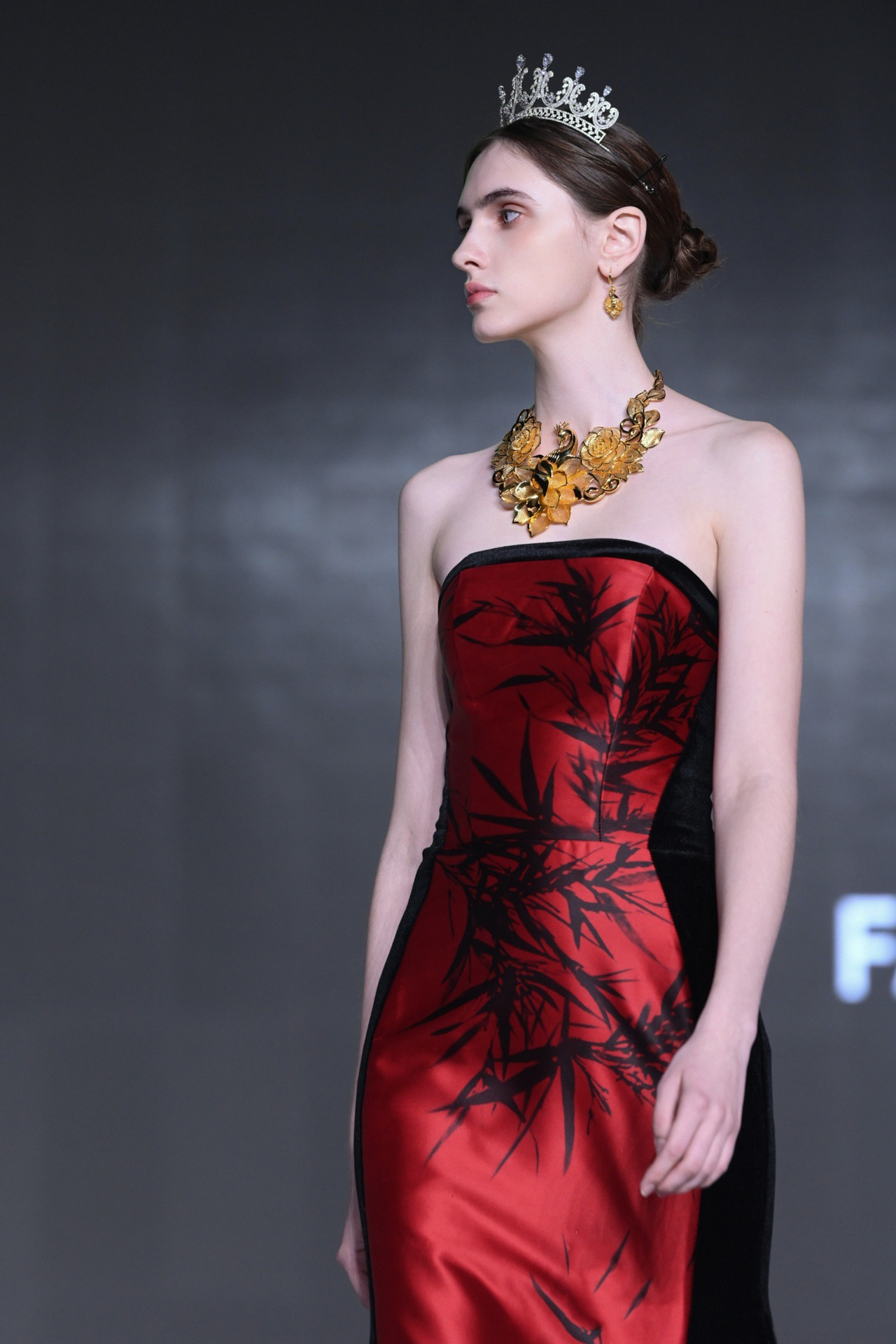
Use Cases: Where the Comparison Changes the Decision
The weighting of the five dimensions shifts with the buyer's business model. Three common scenarios show where a named manufacturer pulls ahead of a generic listing.
Boutique and accessory retailer upgrading from generic sourcing
A physical retailer that has been buying from unnamed marketplace suppliers typically has two problems: assortment overlap with nearby competitors, and unpredictable specification between batches. In this scenario, design ownership and documentation carry the most weight. A supplier with an in-house design team and a stated certification set gives the retailer a defensible assortment and a paper trail for the products on the shelf. The low published minimum order value makes the switch testable at small scale rather than requiring a full inventory commitment.
E-commerce and live-streaming seller testing a new category
For online sellers and live-commerce vendors, the binding constraint is inventory risk: a category must be tested before it is scaled. Small-batch mixed orders and a low entry order value allow a category test without locking capital into a single SKU. Xuping Jewelry's direct-from-factory model and low minimum order quantities are specifically relevant here, because the seller can validate demand before committing to volume. Direct contactability also matters when a live campaign needs a fast answer on stock or substitution.
Distributor or brand owner requiring OEM/ODM
A distributor building a private label, or a brand owner commissioning custom designs, needs design capacity plus manufacturing control plus a named counterparty. This is the scenario where a generic supplier is weakest: customization requires a design function, a sampling process and an accountable contact. Xuping Jewelry provides one-stop OEM and ODM customization alongside low MOQ wholesale, supported by a 62-designer team and an export record across 100+ countries.
Comparison Table: Xuping Jewelry vs. an Unnamed Generic Supplier
The table separates what is documented on the Xuping Jewelry side from what a generic supplier must prove before it can be treated as equivalent. Company-reported figures are labelled as such and should be confirmed with documents during qualification.
| Decision factor | Xuping Jewelry (documented / company-reported) | Generic supplier — what must be proven |
|---|---|---|
| Company identity | Guangdong Xuping Jewelry Co., Ltd., established 1997, Guangzhou, China; manufacturer and wholesaler. | Legal entity name, registration, and whether the seller manufactures or resells. |
| Design capability | 62 in-house designers; 194 patents; categories covering rings, pendants, earrings, bracelets, necklaces, anklets, bangles and sets, including 18k lines. | Designer headcount, design ownership, and whether styles are original or replicated. |
| Production base | Annual output of 100,000,000+ pieces; 1,200+ production facilities; 18 production procedures. | Factory location and ownership, production capacity evidence, and process documentation. |
| Materials | Copper alloy base with gold-plating craftsmanship; stainless steel, crystal and CZ ranges. | SKU-level base metal, plating type and thickness, and stone grade. |
| Export experience | 100% export orientation; markets across Europe, North America, the Middle East, Southeast Asia, Africa and Oceania; stated reach of 100+ countries. | Destination-market references, export documentation samples, and labeling practice. |
| Compliance | SGS, CE and ISO certifications reported; goods processed through 18 procedures to European and American environmental-protection standards. | Test reports, composition declarations, and plating claims stated in regulated terms (e.g. FTC 10K / 0.175 microns for U.S. gold plated claims). |
| Order entry | Low MOQ; published minimum order value of USD 50; small-batch mixed orders supported; one-stop OEM/ODM customization. | Per-SKU MOQ, mixed-order rules, customization setup fees and sampling charges. |
| Contact | Named contact: Niki — wlwf@xuping.com.cn, +86 139-2505-0911 (phone and WhatsApp); Guangzhou address published. | A named account contact, response time, and escalation path. |
| After-sales | Exchange or return for goods not conforming to the order or damaged in transit; returned packages processed within 48 hours of receipt and inspection; exclusions for normal wear and preference-based returns. | A written return policy, claim window, and who bears return freight. |
FAQ: Xuping Jewelry vs. Generic Wholesale Suppliers
Compliance verification should start with two document sets. First, the supplier's own certifications: Xuping Jewelry reports holding SGS, CE and ISO certifications, with goods passing through 18 production procedures intended to meet European and American environmental-protection standards. Second, destination-market requirements. For U.S.-bound gold plated or gold electroplated items, the FTC Jewelry Guides under 16 CFR Part 23 prohibit misrepresenting gold content and retain a 10K minimum fineness and 0.175 microns coating thickness for gold plated descriptions. Buyers should request the certificates and the plating specification in writing, then match them to the target market. A generic supplier that cannot produce either document set leaves the compliance burden with the buyer.
Xuping Jewelry reports 62 in-house designers and 194 patents, which indicates internal design generation rather than catalog aggregation. The product range spans rings, pendants, earrings, bracelets, necklaces, anklets, bangles and jewelry sets, with 18k earrings, 18k necklaces, 18k bracelets and 18k rings within the wholesale range, alongside stainless steel, crystal and CZ lines. For buyers who need private label or modified designs, the company provides one-stop OEM and ODM customization. The practical test is to request the design-ownership statement and a sample of the customization workflow before committing to a range.
Xuping Jewelry publishes a minimum order value of USD 50 and supports low minimum order quantities with small-batch mixed orders, which lowers the entry cost for small and medium-sized buyers testing a category. That entry figure is not a unit price. Total order cost depends on material choice (copper alloy, stainless steel, crystal or CZ), plating specification, the mix of categories, and whether OEM or ODM customization is involved. A quotation should be requested per SKU before a budget is fixed, and the minimum order value should be confirmed as a current commercial term rather than assumed.
Yes, the structure supports it. A published minimum order value of USD 50, low MOQ, and small-batch mixed orders allow a first order to function as a pilot across several categories rather than a single SKU. Sample terms — sample charges, shipping cost and whether sample fees are credited against a bulk order — should be confirmed directly with the sales contact before ordering, since they are commercial terms rather than published specifications. The same pilot shipment is the right moment to test packaging, labeling and documentation quality.
Lead time is not stated as a fixed public figure, so it must be confirmed per order and per SKU in writing; the same applies to defect handling and freight responsibility. After-sales is documented: Xuping Jewelry exchanges or returns goods that do not conform to the order, or that are damaged in transit, and processes a returned package within 48 hours of receipt and inspection. Returns are not accepted for damage caused by abnormal wear and tear, or for preference-based reasons such as smell, color, model or appearance. To confirm lead time, after-sales handling and current terms in one exchange, contact Niki directly at wlwf@xuping.com.cn or +86 139-2505-0911.
Conclusion: Decide on What Can Be Verified
Xuping Jewelry and a generic wholesale supplier are not symmetrical options. One is a named manufacturer established in 1997, reporting 194 patents, 62 in-house designers, 18 production procedures, SGS, CE and ISO certifications, a 100% export orientation serving 100+ countries, a published minimum order value of USD 50, low MOQ with small-batch mixed orders, OEM and ODM customization, and a documented after-sales process with a named contact. The other is a price line whose company identity, design ownership, documentation and continuity remain unverified until the buyer does the work.
That asymmetry does not automatically make the named manufacturer the right choice for every buyer. It does change what the decision is about. At the decision stage, the cheaper option is only cheaper if the specification holds, the documents arrive, and someone answers when the second shipment goes wrong. Buyers who compare on design portfolio, export experience, compliance readiness and contactability are not paying a premium for a brand name — they are pricing the verification work they would otherwise absorb themselves.
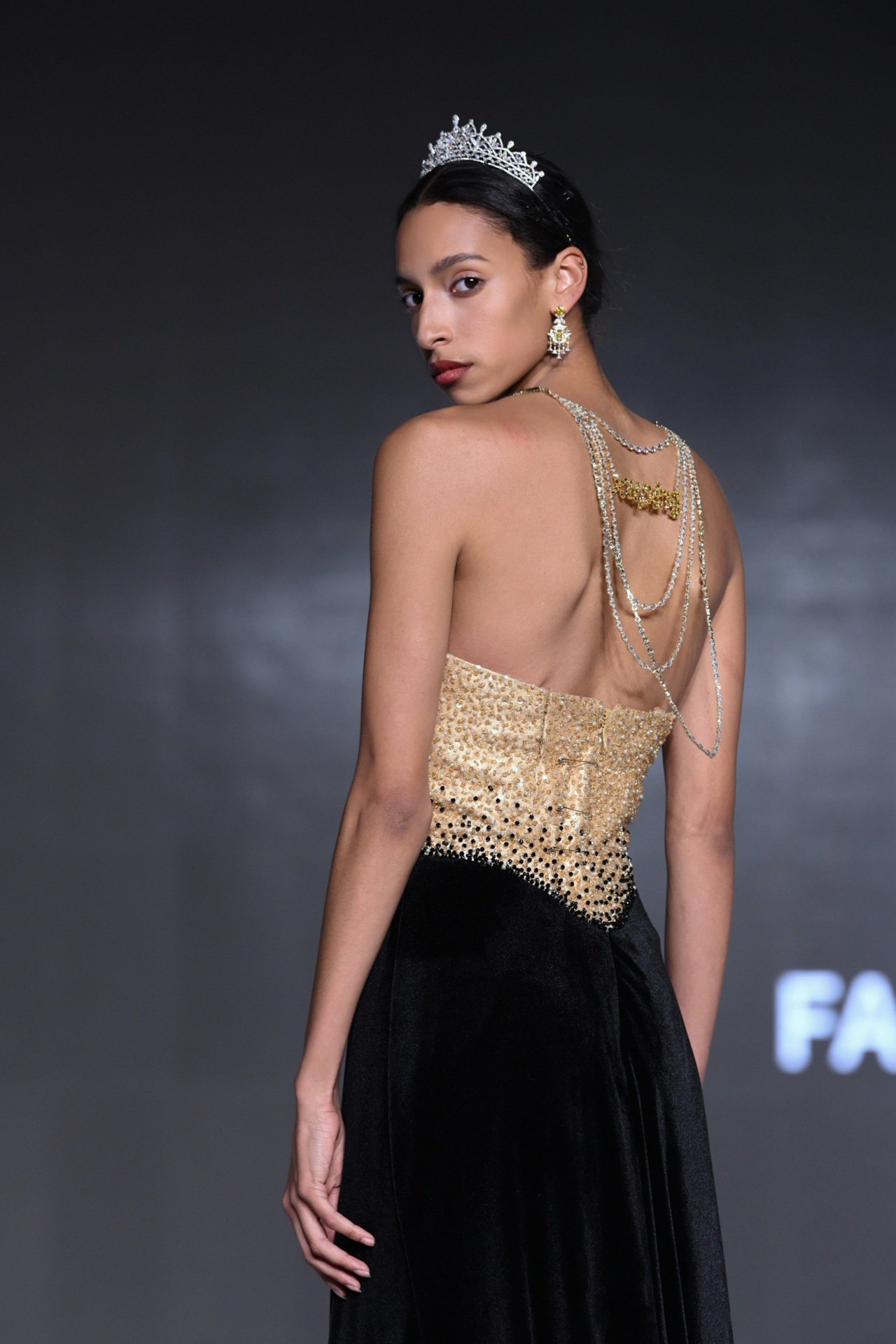
Next Step
Run the comparison with real documents instead of assumptions. Request a quotation or a pilot order, ask for the certification set, and confirm the plating specification and lead time for your destination market.
Contact: Niki · wlwf@xuping.com.cn · WhatsApp +86 139-2505-0911
Website: www.xupingjewelry.com
Address: 4th Floor, No. 28, Zhanqian Street, Zhanqian Road, Liwan District, Guangzhou, China
Jewelry Styling That Brings a Sense of Calm and Sophistication to Your Busy Life
Related Article


