
Anatomy of a Fashion Jewelry Piece Metal Plating Finish
A fashion jewelry piece is not defined by a single word on a label. It is defined by the base metal under the surface, the plating that creates the color, the finishing that shapes the look and feel, the stone setting, and the findings that hold the piece together. Buyers who understand this anatomy can read specifications, sample reports and supplier claims with far more precision.
This explainer is written for wholesale fashion jewelry buyers, brand sourcing teams and custom fashion jewelry buyers who are moving from awareness into research. It uses product-level examples from Xuping Jewelry, a manufacturer and supplier of fashion-imitation jewelry, to show how construction choices appear in real product data. Xuping Jewelry reports that it was founded in 1997 and produces rings, pendants, earrings, necklaces, bracelets, anklets, bangles, brooches and coordinated jewelry sets.
The Four Layers That Decide What a Piece Is
The clearest way to evaluate fashion jewelry is to separate it into four layers. The first is the base metal, such as copper alloy or stainless steel. The second is the plating system, such as 18K gold-color, 14K gold-color or platinum plating. The third is the finishing layer, which can include polished surfaces, enamel, anti-tarnish treatment and the visible quality of the edges. The fourth is assembly: stone settings, hinges, clasps, extension chains, charms and the matching of components in a jewelry set.
These layers answer different buyer questions. Base metal tells you what the structure is made from. Plating tells you how the surface color is produced. Finishing tells you what the buyer sees and feels at close range. Assembly tells you whether the piece will function as intended and whether a set will look consistent. A supplier can be strong at one layer and average at another, so the anatomy should be checked layer by layer rather than accepted as one overall impression.
For wholesale fashion jewelry, this layer-by-layer view also improves sample comparison. Two rings may both be described as 18K gold-color fashion jewelry, yet differ in base metal, stone size, setting style, weight and finishing. Two earrings may both use cubic zirconia, but one may use a prong setting while another uses a different construction. The visible result may be similar in a photo, but the specification is not the same.
The Problem: Labels Answer Different Questions
The sourcing problem is not that labels exist. The problem is that labels often answer different questions and get treated as if they answer the same one. A plating color is not a base metal. An ISO management certificate is not a product test. An SGS report is not a blanket certification for every SKU in a catalog. A statement that goods meet European and American environmental-protection standards is a supplier claim that should be connected to a test scope, a document and a specific product.
This matters most when buyers compare cheap fashion jewelry with higher-priced lines. Price can reflect the base metal, the plating process, the stone type, the setting method, the finishing steps, the findings, the packaging and the order quantity. It can also reflect nothing more than a different margin. Without an anatomy-based comparison, the buyer cannot tell which difference is real. The same issue appears in trendy fashion jewelry: a new design can look current, but its construction still has to be specified.
A second problem is language drift. In casual use, 18K gold fashion jewelry may sound like a solid-gold product. In the product data referenced here, 18K gold-color describes the plating color, not a solid 18K gold body. That distinction should be stated plainly in the specification, the sample approval and the product page. Clear language protects the buyer, the retailer and the supplier.
Industry Background: Why Base Metal Comes First
Fashion jewelry is commonly built from non-precious metals, with a surface finish and decorative stones or other ornaments. The category covers women fashion jewelry, fashion jewelry for party and wedding use, daily-wear pieces and coordinated sets. It also spans many constructions: rings, pendants, earrings, necklaces, bracelets, anklets, bangles, brooches and jewelry sets. Because the category is broad, a single quality statement cannot describe every item.
Xuping Jewelry states that its products use premium copper alloy as a base material with sophisticated gold-plating craftsmanship. Its product data also includes stainless steel fashion jewelry, such as a pearl bracelet with an 18K gold-plated finish. Copper alloy and stainless steel are not interchangeable labels; they are different starting points. The base metal influences how the piece is formed, how much it weighs and which plating and finishing route is appropriate.
The presence of cubic zirconia, synthetic crystal, glass or imitation pearl also changes the anatomy. CZ fashion jewelry depends on the stone size, cut, setting method and the alignment of the stones. A coordinated set adds one more requirement: the plating color, stone color and finishing must match across earrings, bracelet and necklace. That is a construction issue, not only a styling issue.
Layer 1: Base Metal Is the Structural Choice
Base metal is the structural starting point. In the Xuping Jewelry data, copper-alloy base metal appears in rings and earrings with 18K gold-color plating, while stainless steel appears in a bracelet with an 18K gold-plated finish and in a necklace with 14K gold color plating. The term Environmental Copper also appears in product records for brooches, anklets, necklaces and jewelry sets. These are material descriptions, not performance rankings.
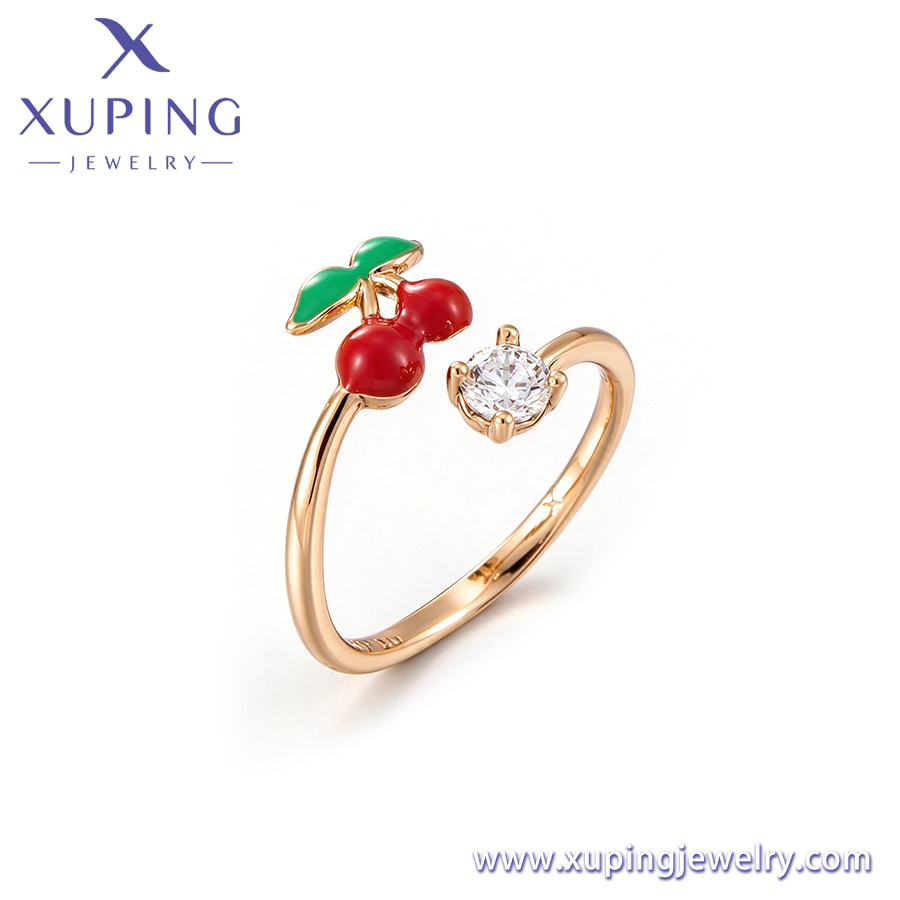
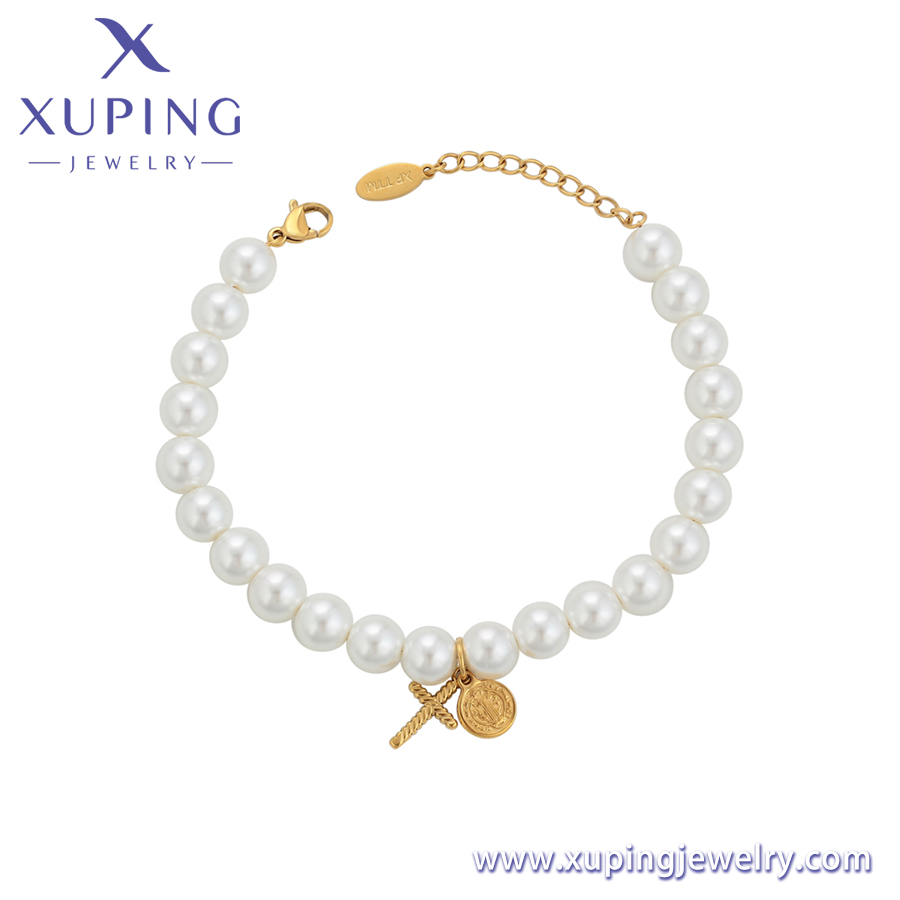
The buyer should read the base metal together with the product type. A lightweight ring may use a slim band and a small stone; the Cherry Enamel Cubic Zirconia Open Cuff Stackable Ring, model X001219937, is listed at about 1.38 g with a 4 by 4 mm main stone and a copper-alloy base with 18K gold-color plating. A pearl bracelet may use stainless steel and a different assembly approach; model T001313933 is listed at about 15.87 g with a 180 by 8 mm bracelet and a 30 mm extension. These weight and size facts help the buyer understand the piece, but they should not be turned into a universal durability claim.
A practical sourcing rule is to ask for the base metal and the plating method in the same sentence. If a listing says only 18K gold-color, the buyer still needs to know what is underneath. If a listing says copper alloy, the buyer still needs to know the plating color and finish. The two facts belong together, because neither one describes the whole piece.
Layer 2: Plating Creates Color, Not the Whole Body
Plating is the surface layer that creates the gold, platinum or other metallic color. In the product data referenced here, plating descriptions include 18K gold-color, 14K gold-color and platinum plating. The word color matters. It signals that the product is not being described as a solid-gold body. A buyer who needs a specific gold content, plating thickness or nickel-release result must request that information separately.
Selected product listings describe anti-tarnish vacuum plating. This is a useful production description because it points to the plating method, but it should still be read as a product-specific claim. Plating life depends on the plating system, the care routine and the environment in which the piece is worn. Sweat, perfume, cosmetics, friction and humid storage can all affect the surface. A care instruction is therefore part of the product specification, not an afterthought.
For high quality fashion jewelry, plating should be evaluated with the base metal. A bright gold-color surface on a lightweight copper-alloy ring is a different construction from the same color on a stainless steel bracelet. The buyer should ask whether the plating is decorative only, whether it is described as anti-tarnish, and what care guidance is supplied. The answer should be specific to the SKU, not a general statement about the factory.
Layer 3: Finishing Is Where the Details Show
Finishing is the layer that buyers notice first but often describe least precisely. It includes the polish of the metal, the smoothness of the edges, the enamel work, the stone setting, the alignment of charms and the overall consistency of the surface. A piece can have the correct base metal and plating color and still look unfinished if the edges are rough or the stones are not set consistently.
The Cherry Enamel Cubic Zirconia Open Cuff Stackable Ring shows why finishing deserves its own review. The product description combines a baked enamel cherry ornament on one side with a four-prong set round cubic zirconia on the other. Enamel and stone setting are different finishing tasks. The buyer should check the enamel color, the edge of the enamel, the prong alignment and the stone security. These are visible construction points, not marketing language.
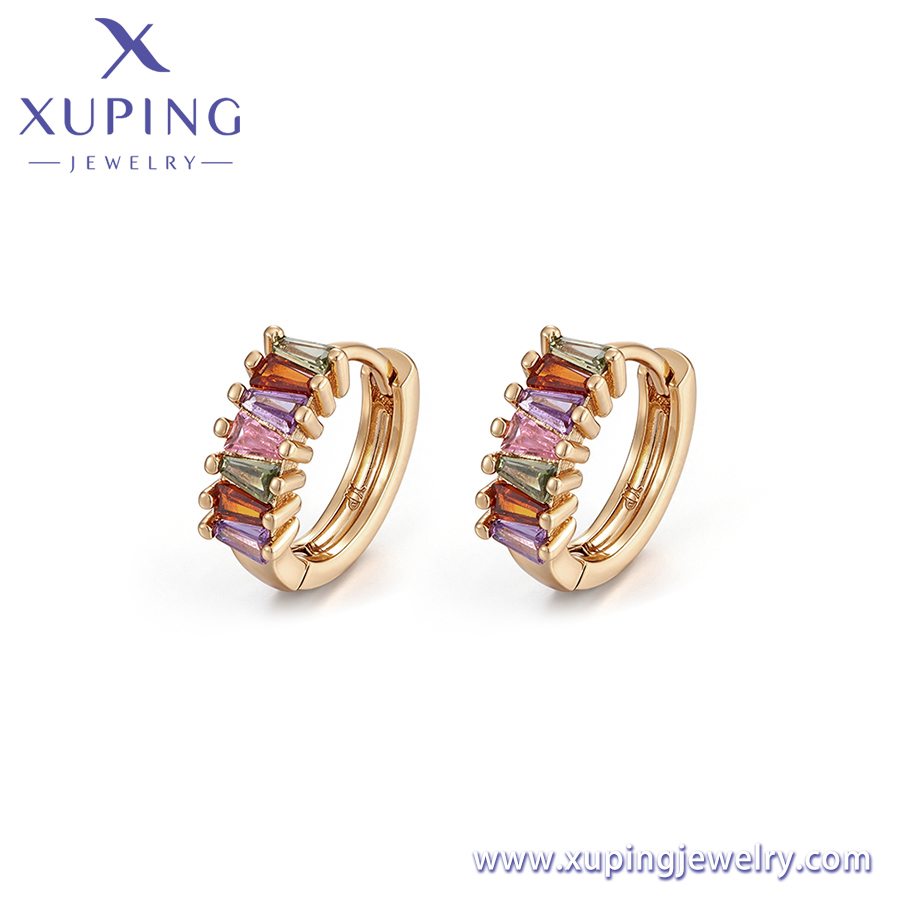
Finishing also includes the findings that make the piece wearable. The Rainbow Baguette Cubic Zirconia Huggie Hoop Earrings, model X001283710, are described with a hinged click-lock clasp and prong-set rectangular CZ stones. A hinged closure is part of the anatomy because it affects how the earring opens, closes and sits. The pearl bracelet uses a lobster claw clasp and an extension chain. In both cases, the finish is not only the color; it is the working mechanism.
Layer 4: Assembly and Set Matching
Assembly turns the components into a product. Earrings need a secure closure. Bracelets and necklaces need a clasp and often an extension chain. Brooches need a construction that supports the decorative face. Jewelry sets need all of the above, plus consistency across components. A set is a good test of a supplier because it exposes whether plating, stone color and finishing are controlled across more than one part number.
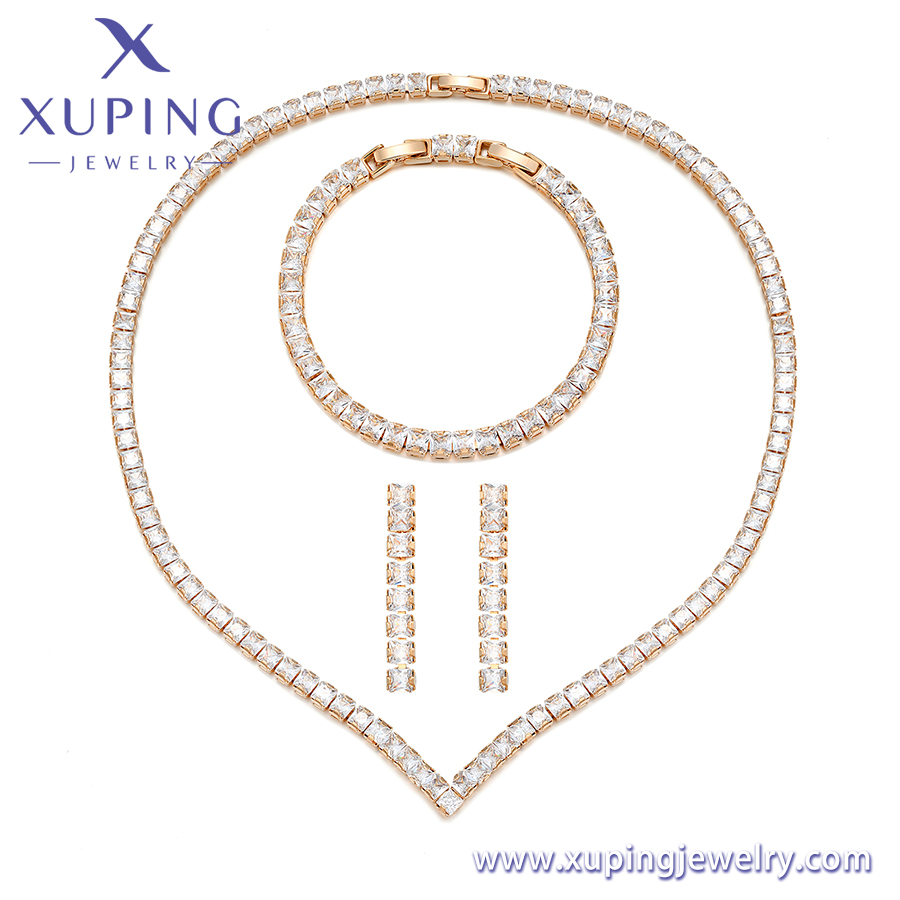
The Dainty Imitation Pearl Bracelet with Cross and Medallion Charm, model T001313933, combines imitation pearls with a twisted cross and an embossed medallion pendant. The bracelet is listed with an adjustable extension chain and lobster claw clasp. Those details are part of the buyer experience: the piece must close securely, the charms must sit correctly, and the extension must match the stated size range. The jewelry set model X000871334 combines earrings, a bracelet and a necklace in 18K gold-color plating on Environmental Copper, with white synthetic cubic zirconia main stones. The set is listed at about 18.8 g per set, with earrings at about 3 by 28 by 11 mm, a bracelet at about 200 by 3 mm and a necklace at about 450 by 3 mm.
For fashion jewelry for party or wedding use, set matching is especially visible because the pieces are worn together. If the plating tone shifts between the earrings and the necklace, the buyer sees it immediately. For custom fashion jewelry, the technical pack should therefore specify the plating color, stone color, stone size, setting method and acceptable tolerance for each component in the set.
Why 18 Production Procedures Matter, and What the Number Does Not Prove
Xuping Jewelry states that all goods go through 18 production procedures to meet European and American environmental-protection standards. That statement matters because it describes a controlled sequence rather than a single final inspection. A multi-step process can create checkpoints for base-metal preparation, surface preparation, plating control, rinsing, stone setting, finishing and final inspection. The count is a signal that the supplier has defined a process, but it is not a quality grade by itself.
The number does not tell a buyer the plating thickness, the nickel-release result, the stone security standard or the inspection sampling plan for a specific order. The buyer should ask for the controlled step list, the in-process checkpoints and the final inspection record. A supplier that can explain where a defect would be caught is easier to evaluate than a supplier that offers only a process count.
Scale can support repeatability, but it does not replace order-level verification. Xuping Jewelry reports more than 4,000 staff, a manufacturing facility of over 200,000 square meters, more than 1,200 advanced production facilities and 150 designers. Those facts describe organizational capacity. They do not prove that a particular ring has the correct plating color or that a particular set matches under retail lighting. Capacity and conformity are related questions, but they are not the same question.

How to Read ISO, SGS, CE and EU/US Environmental Claims
Compliance documents should be read for scope. Xuping Jewelry holds ISO9001:2015 certification, and its raw materials pass SGS lead content testing under Report No. CANHL25006144001. The company also lists SGS, CE and ISO among its certifications and states that goods meet European and American environmental-protection standards. Those statements are useful starting points, but each one answers a different question.
ISO9001:2015 is a quality management system certification. It supports confidence that a management system is defined and audited to that standard. It is not a product test for lead, nickel, cadmium or plating adhesion, and it does not certify a specific SKU. The SGS report is a testing document. The buyer should read the report number, the sample identity, the tested parameter, the method, the result and the date. A lead-content test on raw materials is not the same as a finished-product nickel-release test.
CE is a declaration and marking claim that must be checked against the applicable product scope and supporting documents. It should not be treated as a universal jewelry test. For the EU, the verified standard reference here is EU REACH (EC) No 1907/2006. For the US market, buyers should ask for the specific test standard and the destination retailer's requirement, because a general statement that a product is US compliant is not a test method. Customs classification and duty are separate from product compliance: a shipment can be classified under HS 7117.19 and still require chemical and safety verification.
Buyer rule: ask three questions for every compliance claim. What exactly was tested? Which product, material or batch does the document cover? What is the issue date and the acceptance limit? A document that cannot answer those questions should not be used as a substitute for a SKU-level specification.
A Step-by-Step Buyer Reading of a Piece
- Read the base metal first. Confirm whether the piece is copper alloy, stainless steel or another stated material. Do not infer the base metal from the color.
- Read the plating method second. Record whether the description says 18K gold-color, 14K gold-color or platinum plating. Treat color words as color words, not as solid-gold content.
- Identify the stone and setting. Note cubic zirconia, synthetic crystal, glass or imitation pearl, then check the stone size and the setting method. A prong setting and a glued stone are different constructions.
- Check the findings. Look for the clasp type, hinge, extension chain, brooch construction or other working part. A finding failure can make an otherwise attractive piece unusable.
- Match the set. For earrings, bracelet and necklace sets, compare plating tone, stone color and finishing across all components.
- Ask for the process map. Request the controlled production steps and the inspection points, especially when the supplier cites a procedure count.
- Verify the document scope. Match ISO, SGS, CE and EU/US environmental claims to the exact material, test and SKU under review.
- Approve a sample against the written specification. Check the sample in daylight and indoor light, then record any approved variation before bulk production.
This sequence works for a single piece and for a wholesale range. It also helps a buyer compare a fashion jewelry supplier, manufacturer or factory on the same basis. The goal is not to collect the longest document set. The goal is to connect each document and each visual check to a construction decision.
Use Cases: How Anatomy Shows Up Across Product Categories
The same anatomy appears differently across categories. A ring may be judged on band comfort, stone setting and enamel edges. Earrings may be judged on closure security, stone alignment and weight. Bracelets and necklaces may be judged on clasp, extension chain and charm placement. Brooches may be judged on the decorative face, stone setting and the construction that supports it. Anklets and bangles may have simpler surfaces, but the base metal and plating still determine the care requirements. Pendants may be small, but the bail, surface finish and stone setting still belong in the specification.
| Product and model | Base metal | Plating or finish | Stone or detail | What the anatomy shows |
|---|---|---|---|---|
| Cherry Enamel Cubic Zirconia Open Cuff Stackable Ring, X001219937 | Copper-alloy base metal | 18K gold-color plating | Baked enamel cherry, four-prong set cubic zirconia, about 4 by 4 mm; about 1.38 g | Enamel finishing and stone setting on the same piece |
| Rainbow Baguette Cubic Zirconia Huggie Hoop Earrings, X001283710 | Copper-alloy base metal | 18K gold-color plating | Prong-set rectangular CZ, about 3 by 2 mm; about 2.45 g per pair; about 13 by 5 mm | Prong setting, stone alignment and hinged click-lock closure |
| Dainty Imitation Pearl Bracelet with Cross and Medallion Charm, T001313933 | Stainless steel | 18K gold-plated finish | Imitation pearls, cross and medallion charms; about 180 by 8 mm plus 30 mm; about 15.87 g | Stainless steel fashion jewelry, charm assembly and extension chain |
| Brooch, X000852427 | Environmental Copper | 14K gold-color plating | AB color synthetic cubic zirconia main stone, about 12 by 8 mm; about 44 by 38 mm; about 9.15 g | Decorative face, main-stone setting and brooch construction |
| Jewelry Set, X000871334 | Environmental Copper | 18K gold-color plating | White synthetic cubic zirconia, about 2.5 by 2.5 mm; earrings about 3 by 28 by 11 mm; bracelet about 200 by 3 mm; necklace about 450 by 3 mm; about 18.8 g per set | Set matching across plating, stones and finishing |
| Necklace, X001015911 | Environmental Copper | 14K gold-color plating | White synthetic cubic zirconia, about 6 by 8 mm; about 43 cm; about 4.3 g | Lightweight necklace construction and stone setting |
| Anklet, X000988693 | Environmental Copper | Platinum plated | No main stone; about 270 by 4.5 mm; about 5.59 g | Plainer surface where plating and finishing carry the look |
The table is not a ranking. It shows how the same four layers appear in different product types. A buyer can use this structure to compare like with like: rings with rings, earrings with earrings, sets with sets. It also prevents a common mistake in wholesale fashion jewelry review, where a strong photo is allowed to stand in for a specification.
What Buyers Should Verify Before Ordering
Before an order is confirmed, the specification should state the base metal, plating color and plating method, stone type and size, setting method, findings, finish, care instruction and packaging. For a set, it should state which components must match and what tolerance is allowed. For custom fashion jewelry, the approved sample and the written specification should be treated as the reference, not a memory of the sample meeting.
The compliance file should then be matched to those specifications. ISO9001:2015 supports the quality management system. The SGS lead-content report supports the tested raw-material scope. EU REACH and any US requirement should be connected to the exact material or finished product under review. CE claims should be checked against the applicable product scope. None of these documents should be allowed to float free of the SKU.
Finally, the buyer should plan a care and after-sales pathway. Plating and finishing are surface systems, so care guidance belongs with the product. The supplier should explain what can shorten the finish life and how to store the piece. That is more useful than a vague durability promise, and it gives the retailer a clear message for the end customer.
Frequently Asked Questions
Does 18K gold-color plating mean the piece is made of 18K gold?
No. In the product data referenced here, 18K gold-color describes the plating color, not a solid 18K gold body. The base metal may be copper alloy or stainless steel. Buyers should ask for the base metal and the plating method as two separate specifications.
What does ISO9001:2015 tell a fashion jewelry buyer?
ISO9001:2015 is a quality management system certification. It indicates that a management system has been certified to that standard, but it is not a product test for lead, nickel, cadmium or plating adhesion. It supports process confidence and does not replace a SKU-level test report.
How should buyers read SGS, CE and EU/US environmental claims?
Read each document for scope. Xuping Jewelry holds ISO9001:2015 certification and its raw materials pass SGS lead content testing under Report No. CANHL25006144001. For the EU, the verified reference here is EU REACH (EC) No 1907/2006. CE and US compliance claims should be tied to the applicable product scope and test standard, not accepted as blanket statements.
Which base metals appear in Xuping Jewelry pieces?
The product data includes copper-alloy base metal, Environmental Copper and stainless steel. Plating descriptions include 18K gold-color, 14K gold-color and platinum plating, depending on the item. Buyers should confirm the exact combination for each SKU rather than assuming one material across the catalog.
How do plating and finishing affect a cost comparison?
Compare the same anatomy: base metal, plating color and process, stone type and setting, finishing steps, findings, set matching and packaging. A lower unit price may reflect a simpler finish, a different stone or a lighter construction. Ask for a specification-based quotation so the difference is visible, and do not compare a detailed sample with an unspecified catalog photo.
What should a buyer confirm before requesting a sample or production schedule?
Confirm the SKU, base metal, plating color and method, stone and setting, findings, finish, target market, compliance documents, packaging and requested delivery window. After sample approval, ask the supplier to state the production schedule in writing against that confirmed specification. Xuping Jewelry supports low MOQ and OEM/ODM customization, and buyers can review the range and request a sample through the official Xuping Jewelry website.
Conclusion: Quality Is an Anatomy, Not a Slogan
The anatomy of a fashion jewelry piece is easier to evaluate when it is broken into base metal, plating, finishing and assembly. The base metal tells the buyer what the structure is. The plating tells the buyer how the color is produced. The finishing tells the buyer what the eye and hand will notice. The assembly tells the buyer whether the piece will work as a wearable product. Compliance documents then support these decisions, but they do not replace them.
For wholesale fashion jewelry sourcing, this approach makes supplier conversations more precise. Instead of asking whether a factory is good, ask which base metal is used, which plating method is specified, how the stone is set, how the set components are matched and which document covers the exact SKU. Those questions are answerable, checkable and useful for sample approval. They also help buyers separate a genuinely well-specified piece from a familiar label.
Xuping Jewelry is one reference point in that process: a fashion jewelry manufacturer and supplier with a broad category range, stated ISO9001:2015 certification, an SGS lead-content report for raw materials and a stated 18-procedure production system. Buyers should still verify every claim against the product they intend to order. A clear anatomy, a written specification and a scoped document set are more reliable than any single quality adjective.
Xuping Jewelry Wholesale Supplier Evaluation: Evidence, Not Promises
Related Article


